
Automation Playbook · Zeils Agent
Walk the lane.
Claims in, remittance out.
A working sequence for moving a practice off paper checks and into straight-through processing — lane by lane, with the reconciliation side kept honest.
Intake — where a lane begins
A working playbook for the paper-to-electronic move
This page is for teams that already know what is wrong and want a sequence for fixing it. Moving a practice from paper-heavy handling to electronic, mostly hands-off processing is not a project you finish in a quarter — it is a series of lanes you clear one at a time.
Choose rail
Decide between check, ACH, virtual card and the occasional wire before you design anything downstream.
1 hour to write
RCM
Write the map
List every step from claim submission to posted payment for one payer — calls, portal logins, files, emails.
1 hour
Billing
Enroll remittance
Get 835 files landing against the correct deposit before you change how the payer sends money.
2 weeks
RCM
Open the queue
Name one person who owns exceptions, and give them a fixed daily block to clear it in.
Daily
Lead
Pick the payment rail first
Four rails. Three legs of the same lane.
A typical U.S. provider setup runs on four options — paper check, ACH, virtual card, and the occasional wire for a large balance. They behave differently on purpose. Choose the rail, then design the lane around its quirks.
ACH
Deposits cleanly, carries the remittance alongside it when the payer sends 835 files, and posts fast once the system mapping is correct. The right first rail for the payers you see every month.
Carries remittance
Yes, when 835s arrive
Virtual card
Pays faster and more predictably, but arrives on a card network with its own posting rules. If the practice management system does not recognise the card payment type, the leg becomes manual.
Posting
Native only on wired PM systems
Paper check
Slow, manual, and vulnerable to loss — but culturally familiar and difficult to argue with when the file is opened years later. Keeps a paper trail your team already knows how to read.
Audit trail
Paper by design
The honest mix is usually two rails running in parallel during a transition, not one rail replacing the other overnight. Running ACH alongside a live card flow keeps the cash moving while the map underneath it is rebuilt.
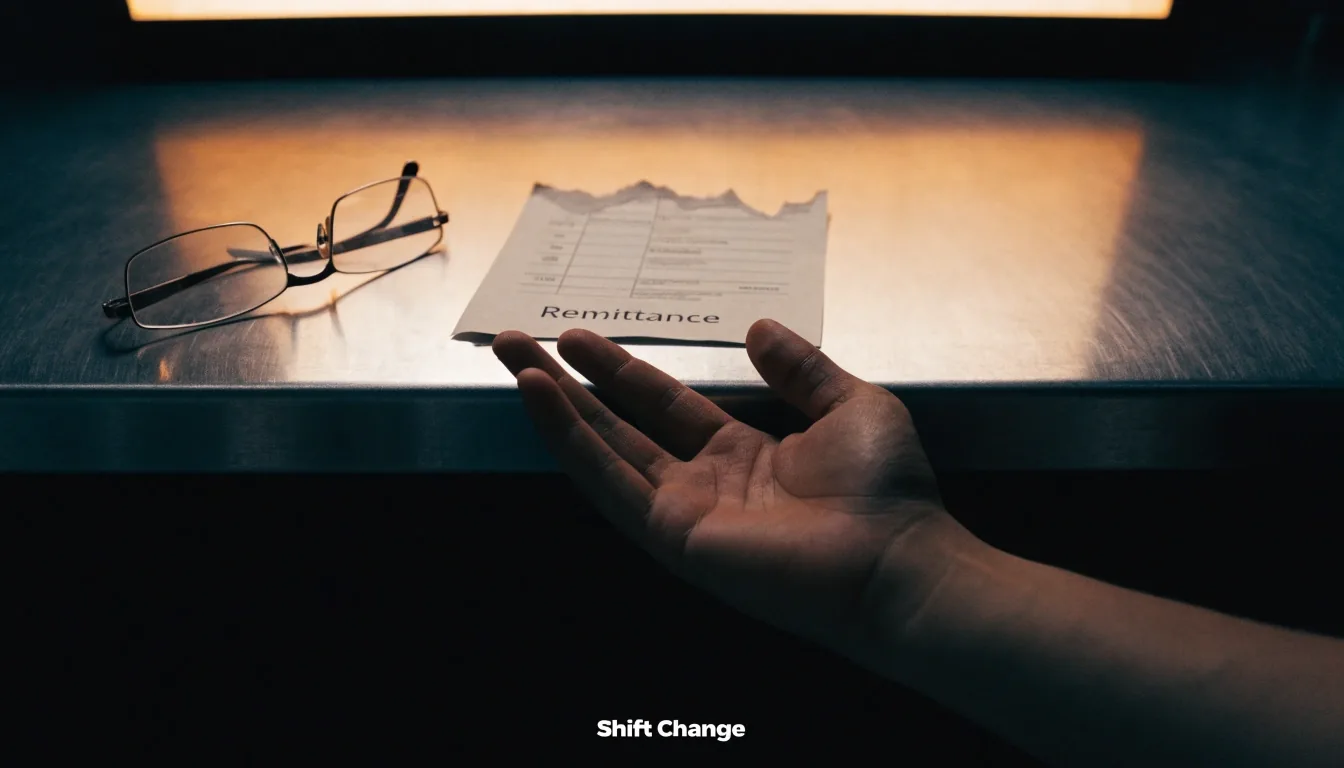
Shift change · the handoff
The room keeps running between shifts — and someone leaves a note for the next set of hands.
Reconciliation slip
Fix the remittance path, not the money path.
The deposit is rarely the problem. The remittance that explains it is where reconciliation stalls. If a payer sends 835 files, confirm they land in the practice management system and post against the matching deposit. If they do not, work that payer's electronic remittance enrollment before you bother changing how they pay you — an ACH deposit without remittance is just a faster version of the same problem.
See how we work the claims and remittance stepProtocol rows
What goes wrong, and what actually moves the needle.
Four notes from the bench — the failures that reproduce across teams, the tools that carry real load, and the three numbers to keep steady.
Exceptions
What goes wrong in the first ninety days
Minutes
The most common failure is not a broken integration — it is that the exception queue has no owner. Payments that do not auto-post pile up, someone checks them weekly at best, and the team concludes automation did not work. It did work; the exceptions were simply not routed to anyone. The second most common failure is turning on a payment rail without telling the person who reconciles it, which forces them to discover the change from a deposit that does not match anything they expected.
Field note: name one owner before you flip the rail, and give them a fixed daily block for the queue. Two decisions, taken in that order, prevent most of the ninety-day stalls.
Meaning
What straight-through processing actually means
Definition
It means the payment posts without a human opening a file, matching a line, or dragging a value between windows. That is the goal — not a description of every payment that arrives. Exceptions are normal, and you should expect a queue of them. The honest target is a large majority of payments posting automatically, with the exceptions routed to one person who resolves them in a predictable block of time each day. Any vendor describing a lane where nothing ever needs a human hand is describing a different business.
Field note: budget the exceptions as a real, standing cost — one person, one block of time, every weekday.
Bottleneck
Your practice management system is where the automation stops
Check first
Your EHR or practice management system is where the payment has to post. If it does not accept a payment type cleanly, the automation stops at that wall no matter how good the payer side is. Epic-based systems tend to have mature wiring here; smaller systems vary widely. Before promising a workflow change, ask one question: does the practice management system accept this payment type as a native posting, or does it require manual entry? If it is manual, you have found your first project.
Field note: the answer to that question is faster to get from your PM vendor's support desk than from trial and error. Ask before you promise.
Readiness
Payer readiness is uneven, and that is normal
Ongoing
Some payers are years ahead on electronic remittance and straight-through processing. Others still send paper. Treat payer readiness as a queue you work through rather than a problem you solve. The teams that get the furthest pick the payers with the highest volume and the most willingness to move, then leave the stragglers on a manual lane with a documented reason. A short list of manual lanes is a plan; pretending you have none is a fantasy. When a payer moves, Zelis portal connectivity and the practice management system both need to be in the same conversation — otherwise the change lands in one place and stalls at the other.
Field note: keep the manual list on the wall, not in someone's head, and review it once a quarter.
Tools and measures
Tools that carry load — and the three numbers that tell you if the lane worked.
None of the platforms below replaces the mapping work inside your own system. What they do is remove whole categories of manual effort from the lane around it.
Waystar
Revenue-cycle tooling strongest on claims and payments posting — the posting half of the lane, where the money explanation meets the money.
Optum
Broader across administrative services. If your team wants one vendor relationship over the full administrative arc, this is the shape to compare against.
Experian Health
Cleans up eligibility and estimates before the claim goes out, which reduces the downstream payment problems the exception queue has to pick up.
Cedar
Handles the patient-side billing experience so the collection conversation is clearer for the person receiving the bill.
If you want a wider view of how these platforms sit against each other, the platform reviews page walks through the trade-offs. For portal-level questions on the payer side, the Zeils Agent support path answers the everyday what-does-this-screen-mean questions.
Measuring whether any of this worked
Pick three numbers and do not move them.
-
Average days from deposit to posted payment.
If this shortens, the lane is doing its job. If it holds flat while the rail changed, the remittance path is still the stall.
-
Percent of payments posting without manual entry.
This is the honest measure of straight-through processing for your practice — not a vendor's number.
-
Count of open exceptions at end of week.
A flat or falling count says the queue has an owner and the owner has the time.
If those three move in the right direction over two quarters, the lane is working. If they do not, the problem is almost never the payment rail — it is the exception queue, the remittance path, or the mapping. Look there before reaching for another tool.
Continue on the site